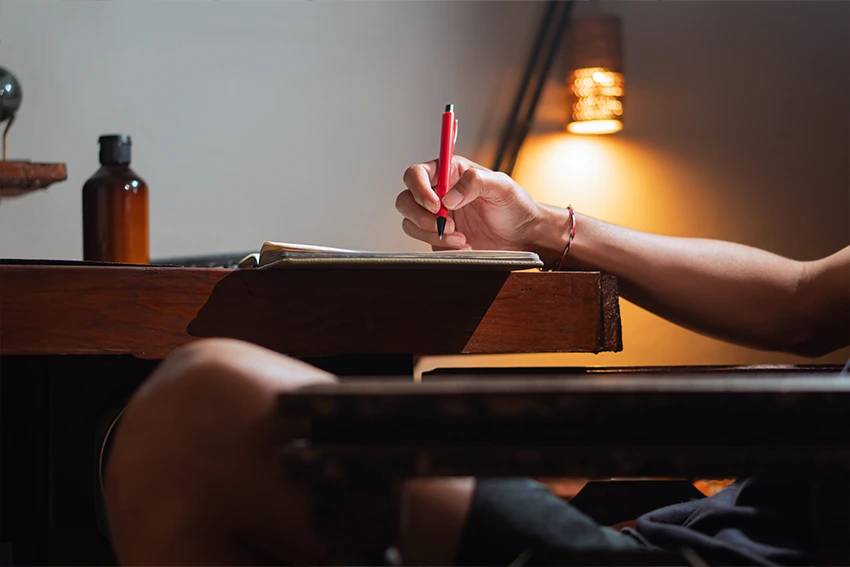
Through the articles of this blog, we have explored various clinical tools. Specifically, we have seen how creative therapy activates healing potential. This activation grants a highly valuable artistic configuration for patients. Thus, therapeutic writing allows exploring the inner world safely. Exploring in this way is never threatening for the traumatized individual. Furthermore, the artistic product drastically reduces daily relational intensity. It decreases the direct emotional burden between the therapist and the patient. Consequently, the healing process flows much more naturally. Definitely, art protects the patient’s vulnerability at all times.
For example, I frequently work with substance use disorder patients. They find a very useful clinical artistic form in poetry. Given their great difficulty in facing intense interactions, therapeutic writing is ideal. Frequently, they employ profound metaphors to describe their severe problems. Understanding and utilizing this symbolism immensely strengthens the therapeutic relationship. In fact, it works exactly the same way as musical composition. In music therapy sessions, creating songs generates a vital communicative bridge. In conclusion, verbal art allows speaking of immense pain without touching it directly.
Additionally, analyzing poems helps patients identify with themselves. It directly favors the functioning of the ego and its most creative aspects. Likewise, poetry allows bypassing the rigid psychological defenses of these patients. It is even incredibly useful when they present very complex psychotic clinical pictures. It facilitates the containment, organization, and expression of hidden painful mental contents. Otherwise, these internal thoughts would be totally overwhelming for them. Sharing poems in a group facilitates healthy contact with other people. In hospitalized psychiatric patients, it notably improves their communication skills.

Transforming Trauma Through Therapeutic Writing
In my current practice with adolescents, I apply diverse creative artistic tools. Besides poetry, we use short stories and fictional narratives. These techniques favorably influence juvenile emotions and social relationships. Also, they improve their sense of life and daily personal achievement. This happens every time they share their artistic products in a group setting. We provide the opportunity to share their life experience in a welcoming way. However, the impact of therapeutic writing must be situated very properly. It must always be used strictly according to the patient’s real needs. When motivation exists, people freely reveal very intimate aspects.
In group therapies, participants usually share very heavy contents. They spontaneously express life experiences with an enormous emotional burden. Although they experience a momentary increase in negative mood, it is stimulating. For the first time, they express traumatic aspects they had not processed consciously. Most people are very willing to reveal this information. They describe their most painful personal contents through therapeutic writing. Often, they patiently edit and correct what they write on paper. They transform the initial content and discover new, highly powerful existential meanings.
This great ability to transform the written word is a healing act. It allows them to find their own solutions to daily internal conflicts. Thus, they manage to transcend highly destructive habitual existence patterns. Generally, these patterns seem conditioned by severe unresolved past traumas. They also derive from the constant concealment of highly important family psychological experiences. This silence tends to inhibit and generate their current severe health problems. Through therapeutic writing, the person actively transforms their harsh reality. They convert emotional content into a story endowed with profound meaning.
Sara’s Life Monologue
The following text is the complete story that Sara presented. She read it within the framework of the therapeutic recitals we planned. It occurred with institutionalized patients diagnosed with a severe addictive disorder. This powerful example of therapeutic writing crudely reveals her pain in several dimensions:
“…When I had nothing, I sold my body to buy drugs… I spent some time roaming the streets… I was raped on the bridge where I lived by the three guys I had gotten high with earlier… I woke up tired and in a lot of pain… Holy shit, I’m still alive! I told myself… I was bleeding a ton… I went to a medical center… I got some tests done… I ended up sterile after that whole thing, at least that’s what the doctor told me… although I think I was already sterile from before… the whole sterility bullshit made me feel awful… I was involved with another addict who, at least I think, I loved… the truth is I’m not very clear, at least I felt he protected me… he lost his life much later, the day I was raped he was no longer around… Honestly, I don’t remember a single heartfelt hug from anyone, well, from him yes… here in treatment I feel like there are people who actually feel it when they hug, others are just full of shit… What a shitshow!… I feel like people enjoy the spectacle of my life… I don’t know if I do too… sadism, said one of the poets from the group of ‘junkies’ I used to hang out with…”
“…Hugs from my family? Much less… there was a lot of violence… I have stolen, lied, manipulated, envied… I am a piece of work and I’ve had to realize that here in the center… I have also learned along the way that, just as therapists help us, when those guys are depressed or pissed off, who knows why the fuck, they mistreat us too… By the way, the doctor: you know who? fell in love with you know who, her patient, and since he got tired of the abuse, the crazy lady kicked him out of the center. And who the hell is she trying to help? She is crazier than I am. Why do these fuckers even study to be therapists? Well, that’s her, because the new ones that arrived are ladies, they are great women…”
The family legacy of addiction
“…Well, my dad is an addict, his dad was an alcoholic, and two of his brothers too… Now that I am here I realize the amount of things they wanted to say and never said… they didn’t know where to start… addiction is emotional, I am convinced… When my dad drank he played the macho man and wanted to beat the shit out of everyone, until one of my brothers knocked him on his ass… he didn’t stop drinking, but he stopped handing out beatings… maybe in this country everyone is an alcoholic or co-addicted to some shit… they buy too much… they eat too much… like my mom and two of my sisters… who also have a lot of rage… one of them started drinking and goes out with a group of weekend drinkers… she comes home hammered… spreading stenches… although I prefer that to the beatings… my sister’s baby will never forget that stench… despite all her bitterness my mom was generous, more than the rest of the crazy people in my family… bitterness was her disease…”
“…Among us siblings, we envied each other, I don’t know why the fuck because we were all broke as hell… after we grew up there were nasty fights… as kids everything was awesome… until I got here, I couldn’t understand the violence in my family… we had all gotten used to it… plus the gossip… nobody ever apologized to anyone… you just keep falling apart over the years… and the family too… although sometimes, we had a good time… Will I get out of this?”
“…I have been working on my fucked-up sides in all the therapies… I leave depressed and sometimes pissed off from the sessions, pissed off when they rattle me, especially the most fucked-up therapists who have never looked inside themselves… you can tell they’ve had it rough too… these guys should let us do therapy on them sometimes, so they know how fucked up this shit is, ha, ha, ha! …In the long run they say it does me good to empty the shit I have inside… …With music it is different, it seems everything unclogs on its own, things come out… it hurts, but differently, music lightens the issue and I can face this shit called life without so much fear and resentment…”
Clinical Analysis and Healing Through the Story
The raw story above shows true clinical power. Over time, Sara reported great benefits in her comprehensive mental health. She achieved a significant improvement in her moderate anxiety and depression. All this was possible thanks to the immense trust generated. The honesty of her therapeutic writing gave her a great sense of achievement. Every time she finished a text, her self-esteem grew notably. Her text crudely reflects the immense addictive pain. She intimately understood that addiction is a deeply emotional disease. She noticed the amount of things her family repressed for years. Verbal art allowed her to see the normalized violence.
Sara also harshly questioned the therapists in her writing. She expressed how some professionals mistreated patients out of frustration. “I leave depressed and sometimes pissed off from the sessions,” she confessed. However, she acknowledged that emptying that great internal pain was healing. “In the long run it does me good,” she admitted with profound honesty. Therapeutic writing served as a perfect container for her intense anger. It allowed organizing an existential chaos that was previously totally unmanageable. Thus, she could process abuses, abandonments, and systemic negligence. Giving a voice to her trauma was the first great step toward clinical recovery.
Finally, Sara contrasted this harsh therapy with the musical experience. “With music it is different, it seems everything unclogs on its own,” she stated. She explained that music lightens the issue in a different way. It allows her to face harsh life without so much fear or resentment. This fusion of creative resources boosted her rehabilitation in an extraordinary way. It demonstrates that every patient needs to find their own expressive channel. Sometimes it is the written words; other times it is the musical sounds. Together, therapeutic writing and music reconstructed her dignity. Thus, creative art progressively saves lives from deep compassion.

